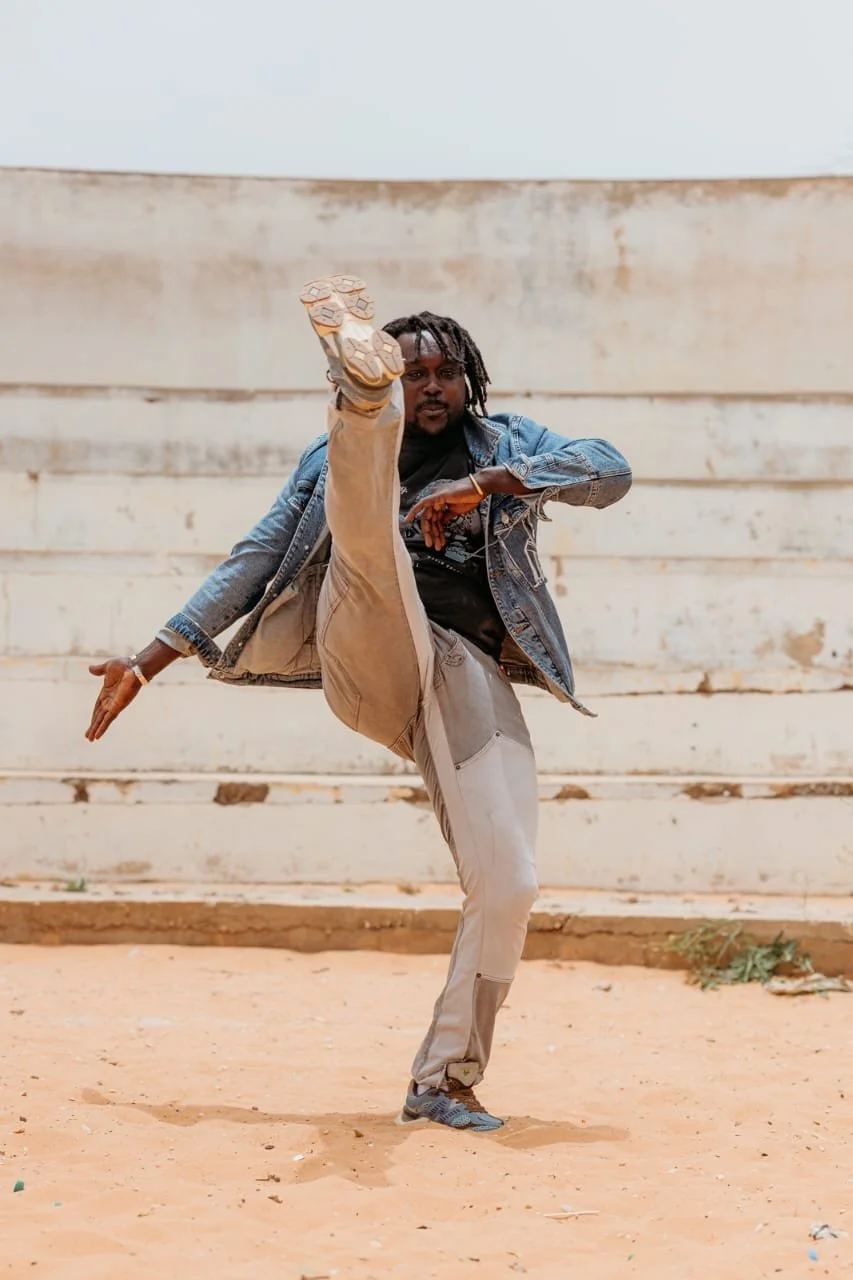
SABAR!
Grounded in a rich heritage, sabar is a traditional dance form originating from the Wolof people in Senegal and Gambia, West Africa. It is very energetic and requires total commitment from the body. Mainly danced on sand, the constantly changing terrain has been an integral part of its development. It is danced high off the ground with exuberance and elegance, deliberately projecting inner calm, joy, and grace. The emphasis is on the articulation of the feet in relation to the ground.
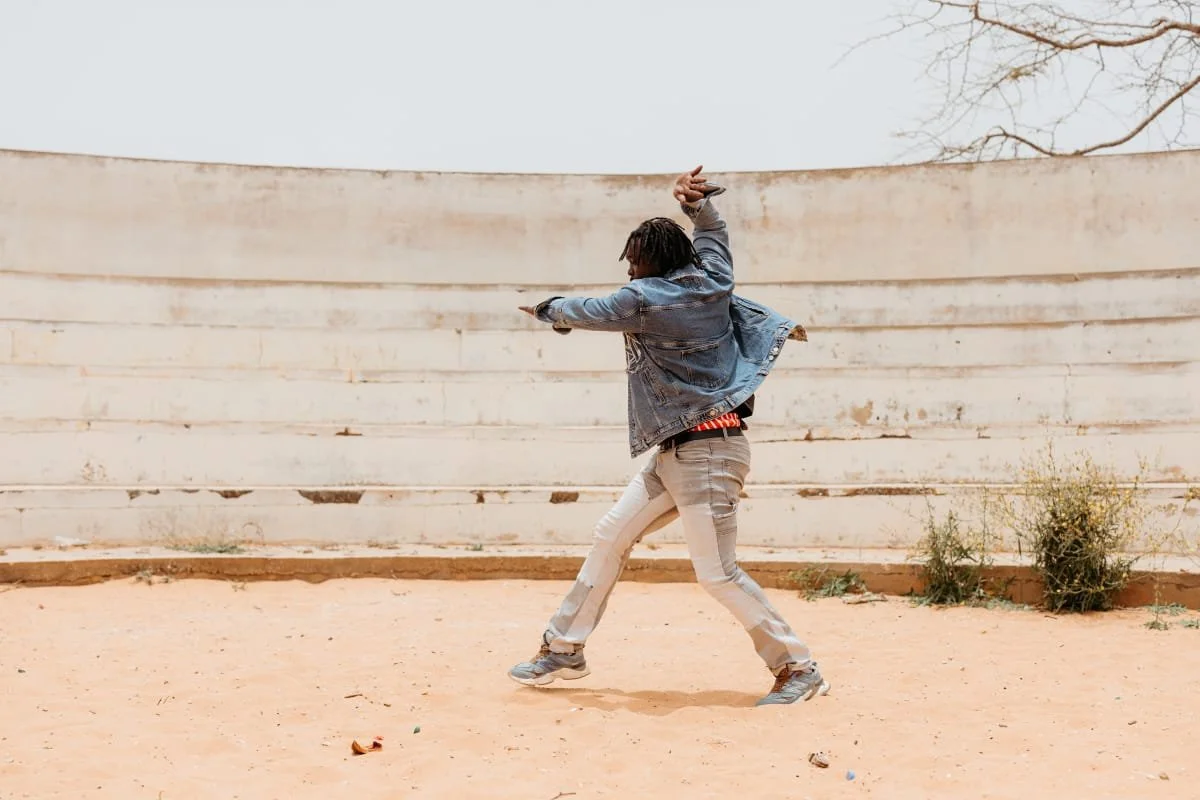
Characterized by rhythmic body movements, improvisation, and powerful drumming, it's a cultural expression for celebrations like weddings, often featuring short, improvised solos, accompanied by griot — known as geuweul, in Wolof, (traditional bards, storytellers, guardians of history in West Africa) — drummers interpreting the dancer’s moves on sabar drums. It can be considered as Senegal's national dance, blending tradition with modern influences and acting as a vital part of community identity. Sabar is a central part of celebrations (weddings, naming ceremonies) and social gatherings, known as sabar events, where it can be performed in the day or night.
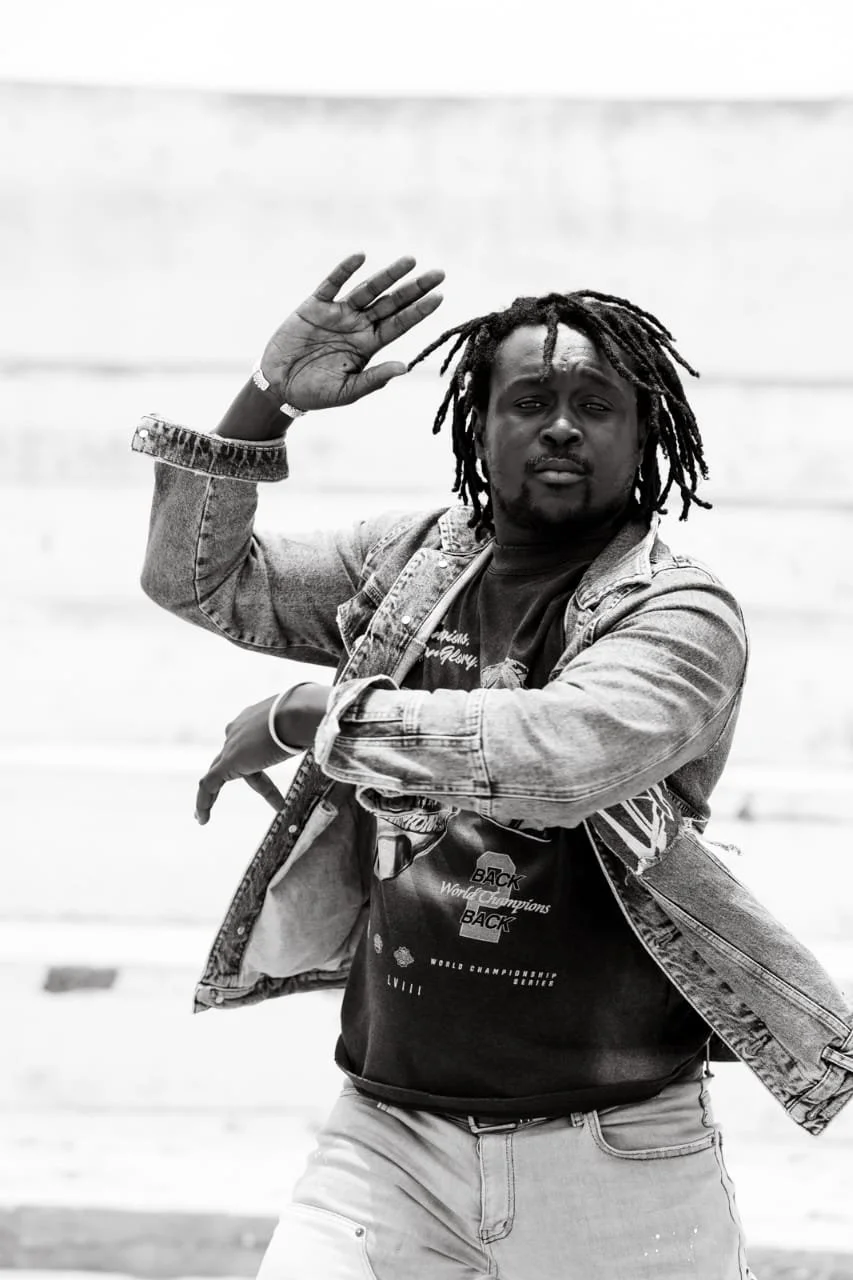
Sabar dance is rooted in a five-step movement base with specific dances, such as Thieboujeun and Bara Mbaye. The base allows for the freedom to create unique movement and rhythmic patterns, with complex and unexpected movements. Improvisation is important and allows personal experiences to be a source of inspiration, giving the dancer the opportunity to fully experience their artistic expression.